Some breeds were bred to do a job. That means specific traits were deliberately selected because they made the breed good at that job. Most people who choose a dog like this appreciate those traits, that's why they chose the dog they did. They don't want their dog's personality to disappear, they just want control.
By the time many of our clients reach us, they've often already put considerable effort into typical training methods. They stayed consistent, put in real time and real money, sometimes even medication, but everything they tried either made very little progress, or worked at the cost of squashing who their dog is. That's not a failure on their part. Some dogs are just too smart and too high drive to respond effectively to any method built around an average dog. These are the dogs that listen perfectly right up until something more interesting shows up, and always seem to find a loophole around whatever plan you thought you had. Training built around the average dog just isn't built for this kind of dog.
Whether your dog won't come when called, overpowers you on leash, or you're managing reactivity, anxiety, or aggression, we assess what's actually driving the behavior, build a plan specific to your dog, and do the work in your home and the environments where it matters.
Real progress, built to hold.
Dogs that are difficult to live with day to day. The basics that should work but don't, in the places where you actually need them.
Cases where something has gone wrong and daily life is affected — safety, routine, or quality of life. These require a precise read on the dog before anything else.
Working-type and high-intensity dogs are fundamentally misunderstood by typical training. What looks like disobedience is often unmet drive, and what looks like aggression is often frustration with no outlet.
It's not unreasonable to expect a dog to be calm in certain situations, around guests, in public, in a busy room. In fact, it's essential that a dog knows how to behave appropriately and can remain calm when the situation calls for it, even when they'd rather not. The mistake most training makes is wanting the dog calm all the time, in every situation. This isn't a dog anyone accidentally ends up with. The drive, the intensity, the intelligence, those are exactly what draws people to a dog like this in the first place, and the goal was never to erase them, just to have some say over when they show up.
Dogs that are encouraged to express excitement in appropriate places learn something that can't be taught by avoiding excitement altogether: how to actually regulate it, staying calm when they need to and coming back under control when they do get excited. That's the actual skill most training never builds, not suppression, but real regulation, developed through practice, not by avoiding letting the dog become excited in the first place.
A highly excitable dog and a dog that is in control aren't opposites. Most training treats them that way, because for most dogs, most of the time, keeping the dog from getting excited is the easiest way to keep them under control. That works, because these are lower-intensity dogs that do just fine with that approach. Once you're dealing with a higher-energy, higher-drive dog, avoiding arousal isn't an option.
Real calm in the moments that matter comes from the opposite approach: a dog with a genuine, structured outlet for the full range of its intensity is far more capable of settling when it counts. Drive that never gets used doesn't disappear. It builds, and it surfaces somewhere else, usually in the exact situations calm was supposed to protect.
Real experience with dogs like this is the difference between suppressing a dog's behavior and actually resolving it. It means knowing when to push and when to back off, not following the same script no matter which dog is in front of you. Most of what looks like bad behavior is a dog working against itself: intensity with nowhere to go, drive with no outlet.
Put the drive in the appropriate places, and the behavior changes, because the dog is no longer denying who they are just to get through the world. A dog that's spent its life pretending eventually can't keep pretending.
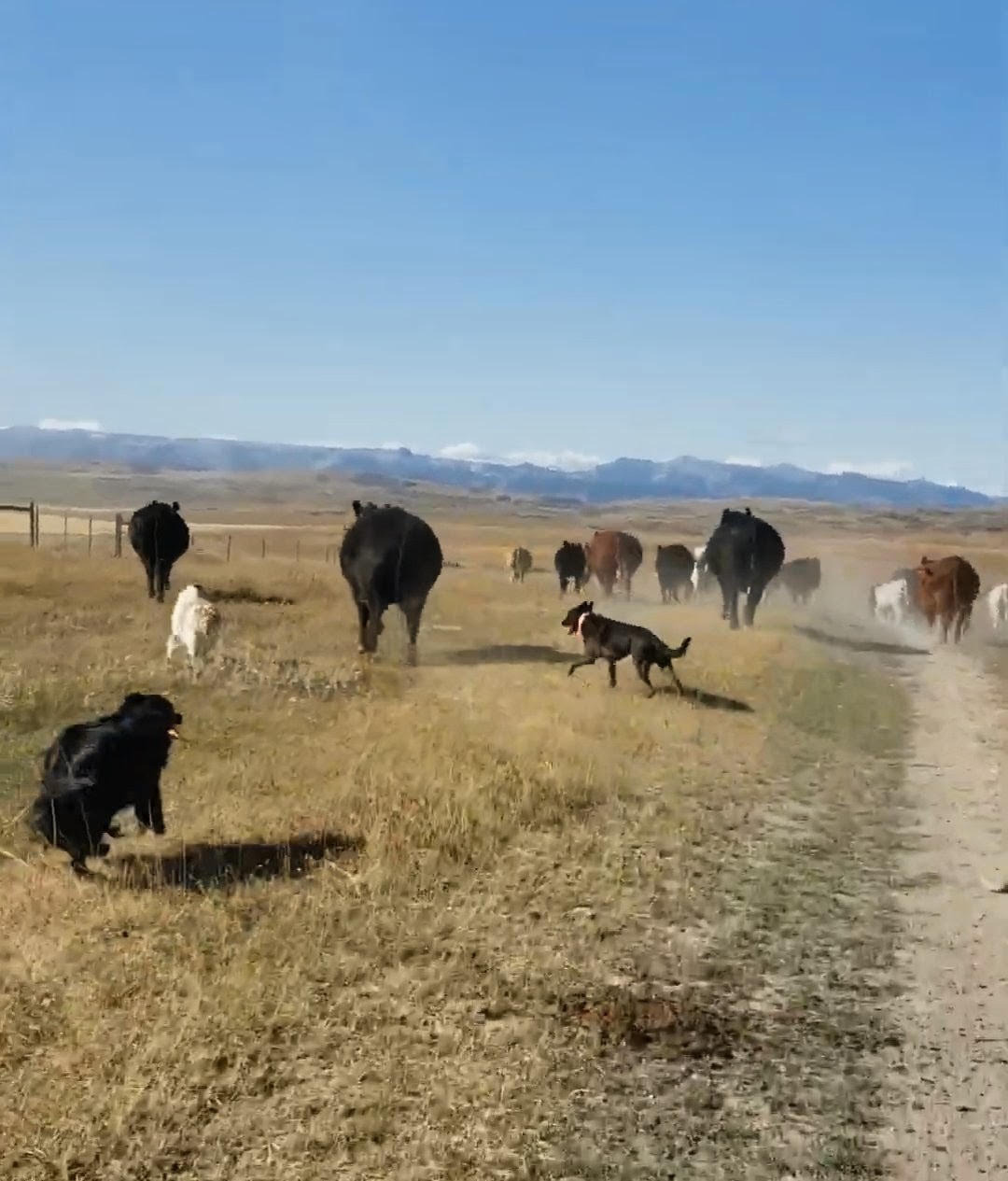
Angie has worked with a wide range of working breeds in the jobs they were actually bred for, at a high level. That's where the read on intensity like this actually comes from.
See More About Angie →Real behavior change isn't about suppressing who your dog is. It's about helping them become the best possible version of themselves, teaching them how who they are can align with the world instead of constantly colliding with it.
Every program starts with an assessment. We get to know your dog, work with you to define a clear, realistic goal, and build the program from there — specific to your dog, your environment, and what you're actually trying to achieve. You'll know what the work involves, what's required from you, and what you can realistically expect. There's no obligation to move forward afterward. Either way, you'll leave with a clear, honest read on what's actually going on with your dog, information you didn't have before. If you do move forward with a program, the assessment fee is credited toward it in full.
Training happens in your home and the environments where the behavior is actually occurring. Not a facility. Not a parking lot. In some cases, board and train may be incorporated where it makes sense for the dog and the program. Where possible, we keep the owner involved throughout.
The goal is always an owner who can maintain the work, not just a dog that performs for us. A dog can look trained in a session and fall apart the moment you're on your own with it, if you were never actually taught what's happening or why it works. You'll understand the plan well enough to keep it going without us in the room, not just watch us execute it.
The dog isn't the only one who needs to understand the plan.